London is a city built on stories of reinvention, from tech hubs in Shoreditch to the financial heart of the city. Our businesses thrive because we attract global talent, fresh ideas, and relentless innovation.
And yet many skilled and motivated women are finding themselves locked out of this ecosystem. Women from refugee and asylum-seeking backgrounds have made London their home, bringing with them professional backgrounds in project management, engineering, education, and entrepreneurship. They are ready to contribute, but their entry is often blocked by how we design our hiring processes.
This past Refugee Week, the theme was courage. Every single day, refugee women show determination as they rebuild their lives in our capital. For business leaders, HR professionals, and hiring managers, it invites a simple reflection — Do our businesses have the corporate courage to meet them, and change the way we recruit?
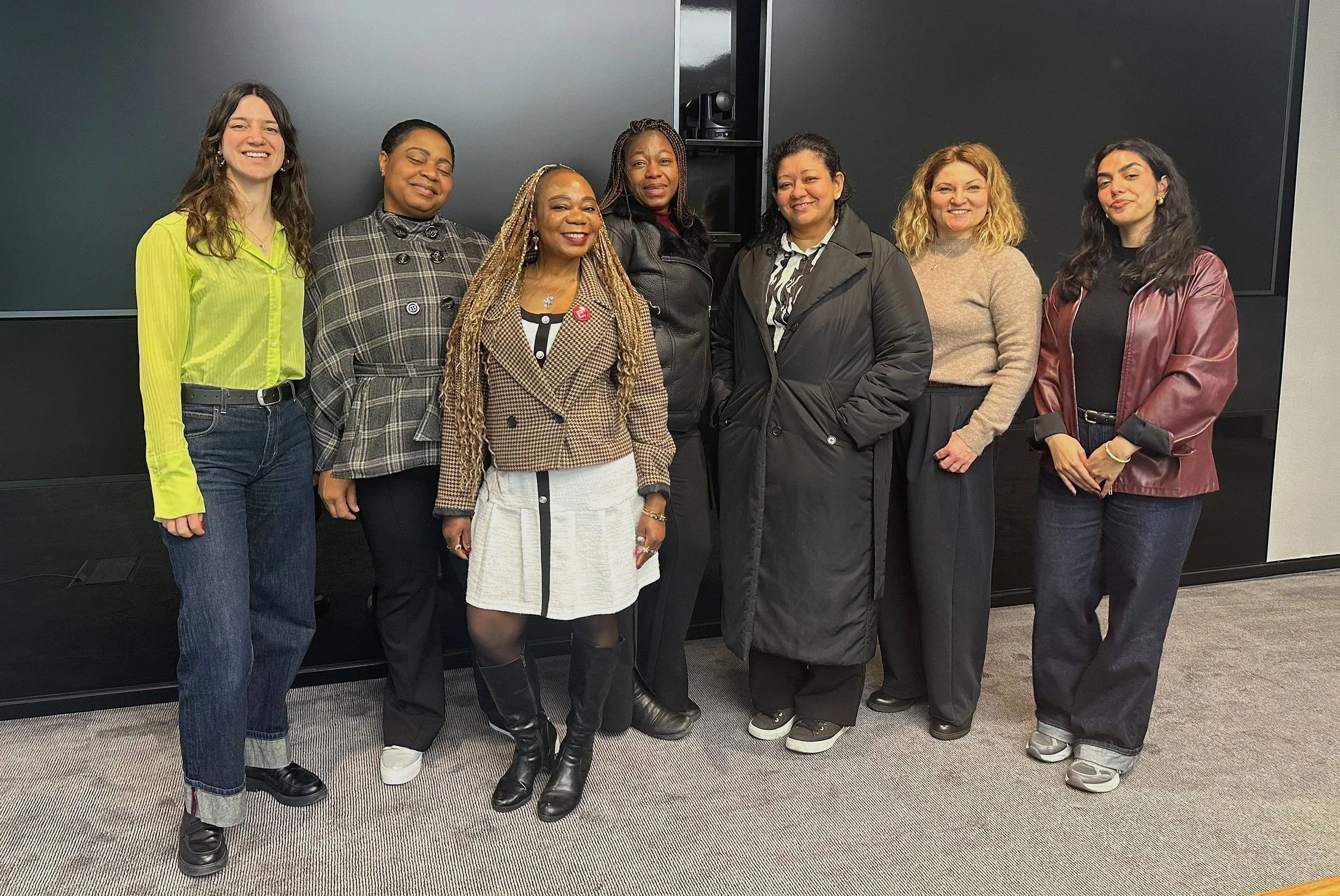
During a recent Lunch & Learn Routes hosted at Islington's social enterprise hub Better Space, local business owners and change-makers brainstormed practical ways to address the employment challenges facing women from refugee backgrounds. It boiled down to a question of inclusive hiring, renegotiating the processes that decide who gets seen, shortlisted and welcomed in, and where specific changes in practice can have an effect.
This is the work we do through our Routes to Employment project, activating employers, placing women from our community into professional roles, and learning what’s useful and what’s not. This is a practical, grounded blueprint drawn from these experiences, the sector and the businesses working to get this right, in order to make your hiring processes more accessible.
Shifting the Mindset
Before changing your processes, there’s a need to rethink how your company defines talent.
Hire for ‘Culture Add’
Organisations can hire for a "culture fit,” which may lead to a filter for the familiar, hiring people who look, talk, and think like the team that already exists. Inclusion means changing the way we hire by looking for what is different. "Adding" is intentionally seeking out perspectives, skills, and life experiences that your organisation will benefit from. Refugee women bring an international worldview and adaptability. By welcoming them into our businesses, we are inviting different perspectives that can challenge habitual processes, shake up thinking, and help organisations grow.
Recognise Resilience
Resilience is a defining leadership trait. What’s less examined is whether hiring processes are built to spot it. Forced displacement requires individuals to navigate unfamiliar legal, linguistic, and social structures while rebuilding their lives, calling on the agility, problem-solving, and emotional intelligence that businesses would like in their leaders. But our own research into refugee women's employment journeys in London tells us otherwise. 13.2% of the women we surveyed said a lack of UK work experience when changing career path was holding them back, and a further 7.36% pointed specifically to having no UK work references, regardless of the experience they already had. London's job market lacks mechanisms for recognising skills and qualifications gained abroad (Routes to Employment, 2025). It’s clear that resilience rarely gets picked up where employers may be looking for it.
In our flagship mentoring programme, one of our alumni mentors, a senior Managing Director at a global financial services firm, recently reflected that watching her mentee show up consistently for their sessions, despite ongoing challenges, made her realise the resilience her mentee carried was a quality she wanted to emulate in her own leadership. If that shift in thinking can happen across a four-month mentoring relationship, what would a hiring process need to look like to recognise that same resilience at first meeting?
Rewriting Recruitment
Where the filtering happens, and how to take it apart.
Look Beyond the CV
A chronological CV assumes a steady, linear, and uninterrupted life, but for most refugee women, that's not the life they've experienced, and it's not a reflection of their capability. UK Government research on recruitment bias has found that AI screening tools learn from historical hiring patterns and can automatically score down CVs with employment gaps. This doesn't just lock out displaced talent, it also affects other groups, such as parents returning to the workforce, carers, and people managing long-term health conditions or disabilities.
We should focus on what people can do, using blind CV reviews where names, graduation years, and specific locations are redacted to minimise unconscious bias. Better yet, invite candidates to complete a simple, practical task that demonstrates their current skill set, instead of relying on a written history of where they have been. Sector initiatives, such as Aon’s Displaced Workforce Impact Programme in partnership with charity Refugee Employment Network (REN), have facilitated insight and corporate navigation sessions focusing on identifying transferable capabilities in helping displaced professionals understand the complexities of the UK job market.
Stop Requiring UK Experience
Another persistent hurdle is the demand for local work experience or British references. Without that initial opportunity, people are often caught in a loop. They’re told they need UK experience to get the job, but are unable to get that experience because no one will take the first chance on them. The Tent Partnership for Refugees Employers' Guide to hiring refugees points to that pattern. Research from the CIPD Trust shows 39% of refugees surveyed had to drop down to an entry-level position compared to the role they held before arriving in the UK, and one in three said they never get to use the skills from their qualifications. Someone who has experience managing a budget, navigating a supply chain, or coordinating a team has already demonstrated what most employers are hiring for, regardless of the geography in which that experience was built. What's often missing isn't the skill, but the opportunity to show it.
Through Routes to Employment, we’ve been working with London employers to create paid placements to bridge the gap between refugee talent and the roles they’re qualified for. We supported a candidate into a three-month software developer role with web development agency Octophin Digital. She brought transferable skills from work experiences overseas, but had none in the UK. By introducing her to Octophin, and providing check-in support throughout the placement, we helped her translate that experience into a UK role. She’s now contributing to their digital work.
Remove Jargon From Your Job Specs
Corporate British English is packed with acronyms, idioms, and industry slang that can feel intimidating to someone unfamiliar with UK workplace culture, even if they’re fluent in English. The Refugee Council ran two pilot projects reviewing their own recruitment processes, and those of two smaller partner organisations. One of their key findings coincides with the need to keep job descriptions short and clear. If a sector this close to the issue is reviewing its own language, one would assume that most job specs require similar scrutiny.
Inclusive Interviewing & Onboarding
The process that gets them through the door, and determines whether they stay.
Interview the Person
Treating every candidate identically isn't the same as treating them fairly. A person balancing childcare, temporary housing, or unreliable internet access doesn't start from the same place as someone who isn't dealing with any of that. A single interview format won't help you see who is better suited for the role. Embed flexibility as a standard. Offer asynchronous video interviews. Give a clear, step-by-step agenda of what the interview will cover. At Routes, we share interview questions with candidates a week ahead of time, because it removes some anxiety that has less to do with someone's ability, and more to do with how unfamiliar the process feels. If in-person interviews are required, offer to cover travel and childcare costs.
Local business owners we’ve spoken to worked through this question themselves, and landed on changes that could go further than most employers expect. Paid trial shifts let someone show you what they can do. Collaborative interviews, where a candidate works through a scenario alongside the team, can surface more than a list of interview questions. And whatever format is chosen, be explicit and consistent about what happens next. Specialist organisations like Breaking Barriers already build bespoke pathways with employer partners across retail, healthcare, and engineering, moving candidates through workshops and assessment days before a paid placement, rather than relying on an interview to decide. The employers they work with gain a more accurate read on candidates, and their teams pick up new skills and support in the process too.
Build Psychological Safety into Onboarding
True inclusion begins when the contract is signed. For someone with experience of displacement, entering a new working environment can feel overwhelming. Create a compassionate, trauma-informed onboarding pace. Never expect or pressure her to share her personal background or migration journey. Let her be known for her professional expertise, sharing her story only if she chooses. Consider pairing her with a peer buddy outside her direct line management so that she can ask the questions a manager relationship might not make room for.
In our sector, organisations developed to support people with lived experience treat safety as something that requires structure. The Refugee Council's toolkit for managers, designed to help staff with lived experience of displacement build trust and progress in their careers, is worth referring to for any employer wanting to build supportive relationships, and adopt a strengths-based approach to bringing out skills.
Start With Your Organisation
The barriers worth looking at are the ones inside your own walls.
Question Day-to-day Norms
It’s easy for any business to sit inside its own echo chamber, assuming its recruitment and workplace culture are already open to everyone. Real change usually starts when leaders step outside that comfort zone and ask harder questions about who is being left out. At a recent networking breakfast with Vauxhall One, we asked business leaders to do exactly this, think about their own workplaces and question whether their processes are as inclusive as they think. It takes courage to admit where your systems are falling short, but that self-reflection is the moment inclusivity can be put potentially into action.
Invest in Proximity
You cannot shift a barrier you don’t fully understand. An effective, meaningful way to burst an organisation’s bubble is to bring your team into proximity with the realities of people you might not otherwise meet. Partnering with Routes to involve your senior leaders and managers in our bi-annual mentoring programme puts them in a four-month-long one-to-one relationship with someone navigating the distinct systemic barriers we’ve been mentioning so far.
Inspired by our mentoring partnership, UBS took it a step further, piloting a reverse mentoring scheme with us where refugee women who have previously worked towards their goals in our mentoring programme, mentored executives on cross-cultural understanding, leadership and resilience. It challenged these leaders on their assumptions, not as a tick-box exercise, but as a shift in how they think about ‘welcome’ and who belongs in their teams.
Taking the First Step
Rethinking everyday hiring practices takes effort. It means looking at habits and finding the courage to say, "This isn’t working for everyone, so let's try something different." When you open your doors to other individuals whose paths here haven't been straightforward, you can welcome colleagues with unique perspectives, approaches to problem-solving, and dedication.
The barrier most employers raise is capacity, that some of this is possible if there was more time or resources to spare. Yet, if a room of business owners can work through several ideas taking into consideration their limits under ten minutes, imagine what your team could do within an hour. Routes runs Lunch & Learns for businesses ready to take a closer look at their own hiring practices on where to start. If that's useful to you, get in touch.