Practices that support our work: collective care
How do you keep going and keep momentum, when there are systemic barriers that make it difficult for people to reach their goals? During this summer Mini-Series, we reflect on a few top practices that support our work.
In the first part of the series, Routes’ Mentoring Programme Manager Shunn reflects on what it means to work towards a feminist workplace and what accessibility has taught her about collective care.
I joined Routes in early 2025 as a Mentoring Programme Manager. Before that, I was off-work for my health for over a year. So it was exciting for me when I joined Routes, where the main pull for me towards the role were the values of the organisation.
Joy, Welcome & Autonomy, these three words struck me when I first learned about the work of Routes. They are the values that we work with. Often, autonomy is not something you see in the sector that we work in, yet it is such an important value. In fact, especially in the hostility we are in today, those values are needed to be embedded in the refugee sector more than ever.
Routes’ values are not only embedded in the organisation - these also reflect in the daily delivery of our programmes as well. For example, the Mentoring Programme is such a unique programme that is designed to offer individualised support to the mentees. Our Mentoring Programme follows the lead of the mentee, as we believe that each individual is their own expert for their life and knows best for themselves. I got to continue practising non-directive communication when I joined Routes, and it feels natural for me coming from my own practice of intersectional feminism.
My background is in feminist movement building and feminist research. In the past, I worked under a lot of political constraints and risks. Before Routes, I had actually never been in the service delivery work before. The collective care in the organising/movement building spaces is part of the political vision you are building together with the community. Movement building used to be my whole life, so I spent most of my days, nights in it.
In the past, I did not practise much resting - not because I did not know how to, but because that work brings a lot of joys in my life and I did not consider that as work. It is also ‘living a feminist life’ as Sarah Ahmed beautifully wrote: how feminist theory is actually generated from daily life experience, work and the home.
“
In the movement building space, you are constantly questioned, challenged and asked to unlearn things, in order to imagine a different future for the world that we want to live in. Much of its work of course centres around autonomy, care and solidarity. When I was looking for jobs after my recovery from complex health issues, I was looking for something similar, such as women’s organisations and community-building. I was particularly interested in roles where I can transfer my skills from my previous experience. That’s when I joined Routes!”
When I joined Routes, I was curious whether my values from the movement building could exist within an organisation. Often driven by difficulties within the funding landscapes and working within a complicated system, organisations can end up in some ways reinforcing the hierarchy of the system when engaging with the community. But that is not my experience with Routes at all. Every detail of the work is crafted with care, thoughtfulness and curiosity. It is one of the few organisations in the sector that lead with feminist practices that are guided by the intersectional values and principles. It is amazing to see how collective care is also practised in the service delivery work.
Over the past year, I have also been navigating my own health condition. Like many people living with long-term chronic health conditions, there are days when my energy changes unexpectedly. Some days require me to rest more than other days or I need to take breaks often during my working hours. What has been different at Routes is that accessibility has never felt like something I had to earn. Rather than having to constantly prove myself, I was trusted to understand what I needed to do my work well. Reasonable adjustments were not framed as favours but rather well-placed systems in the organisation to help people like me to do quality work. They were recognised as part of creating an environment where people can contribute sustainably while recognising our own needs for both mental and physical health. That is quite radical in a world where the system asks you to be constantly productive or accessibility is a mere accessory but doesn't reinforce the practice.
Accessibility is often imagined as ramps, software or equipment. Those things are essential of course but accessibility is also emotional, organisational and relational. It is asking, "What do you need to do your best work?" and believing the answer. I was encouraged to think about the support I need to do well in my daily work with my existing health conditions. Because people are seen as whole human beings rather than simply productive workers, conversations become more honest, collaborative and supportive. That for me is how Routes is practising collective care in daily life and how it changed the way I think about accessibility too.
“When people talk about feminist workplaces, they often begin with policies such as flexible working, equal pay, sick leave and so on. These things matter deeply but over the past year, working at Routes has reminded me that a feminist workplace is not simply built through policies. It is build through everyday practices of care, trust and relationships. It shows us that designing workplaces around human diversity rather than expecting everyone to perform in identical ways.
”
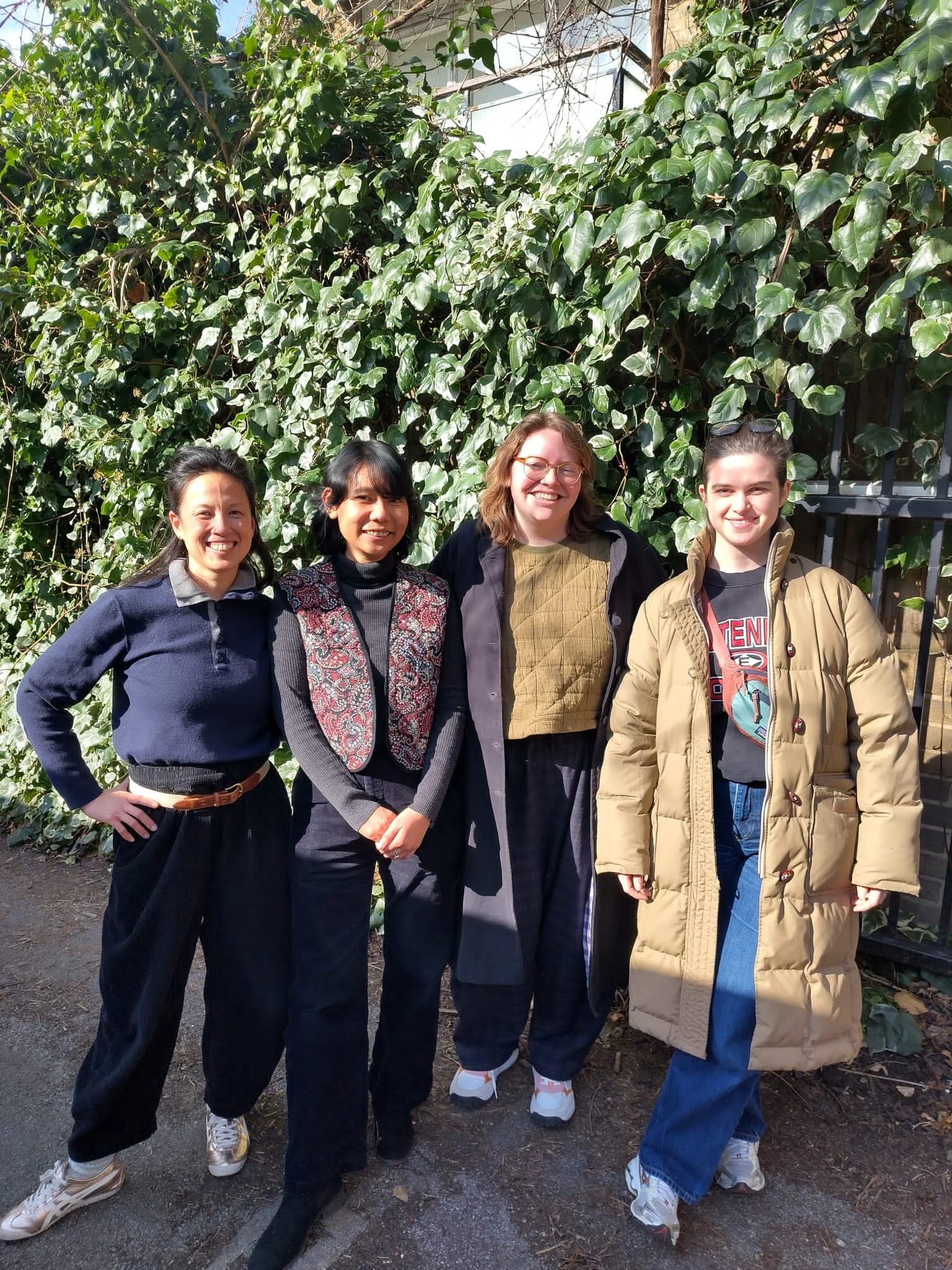
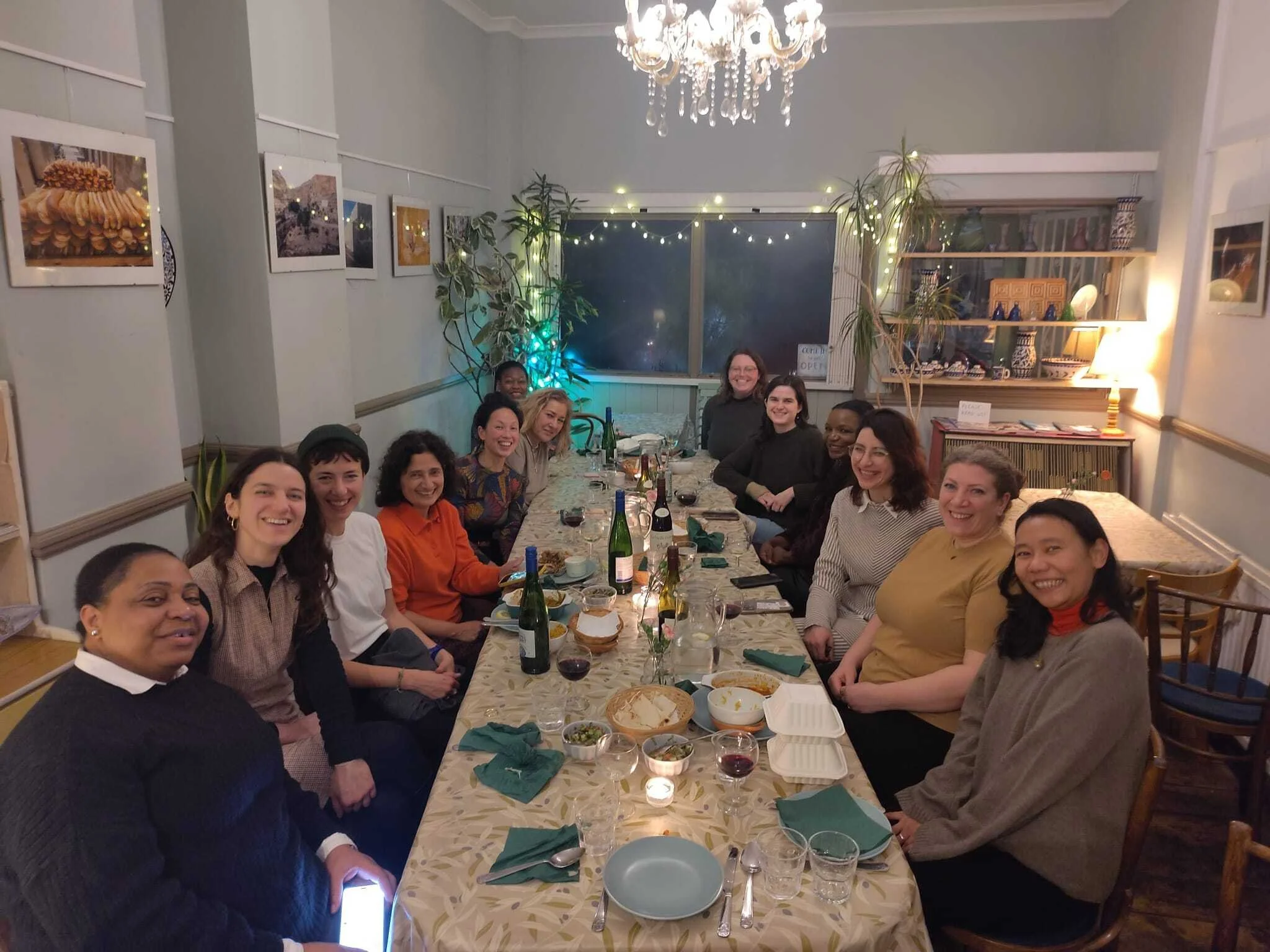
Picture on the left: members of the Routes team - Ni, Shunn (second from left), Leyla and Jocelyn.
Picture on the right: yearly dinner with Routes team members, Board members, and members from the Routes’ Lived Experience Leadership Group. Shunn can be seen sitting as the first person on the right side of the table, with the big smile.
Working at Routes has reminded me that organisational culture is political. Every meeting, every decision about workload, priorities, delivery, every conversation about wellbeing communicates something about how we can best support each other. One of the most important lessons I have learned is that accessibility is never only about one individual. It recognises that every person moves through the world differently, and that difference is not a problem to be solved but a reality to design for a world that we want to live in. When organisations across the sector think about inclusion, I hope accessibility is no longer treated as a specialist conversation. It should be part of how we think about leadership, programme design, organisational development and workplace culture. It is about creating a feminist workplace and changing the narrative of the workplace into a more joyful space that allows people to thrive.
Routes often speaks about welcome, joy and autonomy as values that shape both our Mentoring Programme, our other projects and our organisation. Those values are not abstract aspirations or exist only on paper. They are practised through small, consistent actions that make people feel trusted, respected and able to bring their whole selves to work. Creating a feminist workplace is not a destination we arrive at, rather it is an ongoing practice of reflection, adaptation and collective care. With that practice, we can create a different world that we want to live in, where people can thrive to their full potential.
My health condition has taught me many things over the past year, but perhaps the most important is this: accessibility is not about lowering expectations. It is about removing unnecessary barriers so people can thrive. That, to me, is one of the most feminist practices an organisation can do.
Thanks for reading! Stay tuned for Part 2 of this Mini Series, with reflections by Shunn, Routes’ Head of Programmes Wieke and our Mindfulness facilitator Charmaine, on mindfulness as a set of skills to support goal work and autonomy.